
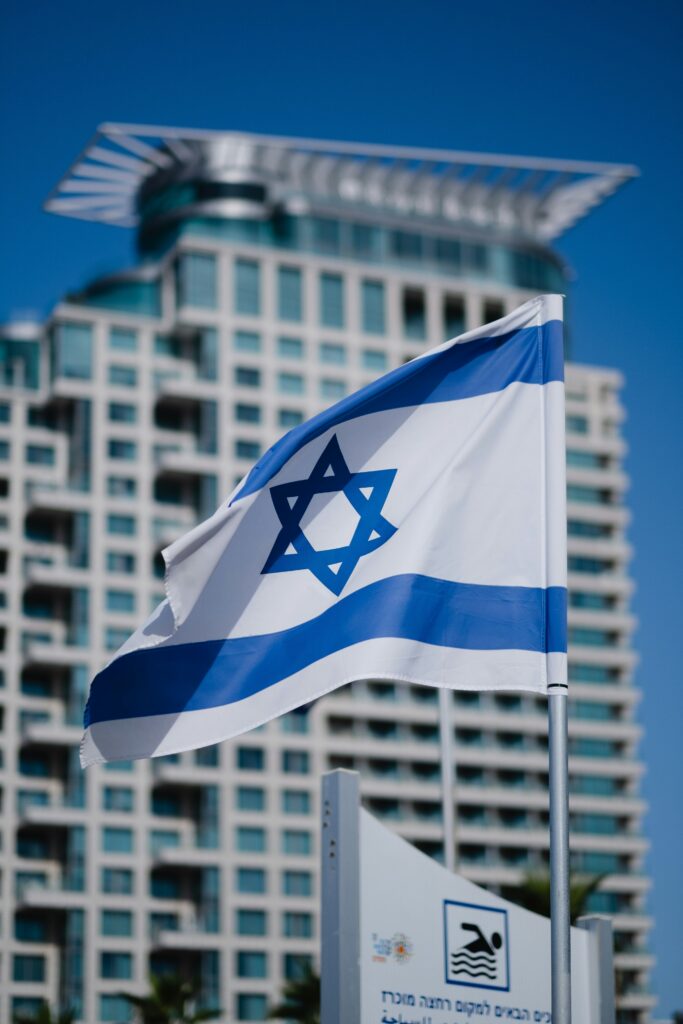
Established in 1948, Israel is the world’s only Jewish state and the sole democracy in its vicinity. Israel is composed of many different nationalities and cultures and is home to religious and ethnic minority populations such as Muslim Arabs, Christians, and Druze.
The city of Jerusalem is the nation’s capital, the seat of the Knesset (the Israeli Parliament), the Israeli Government, the Supreme Court, and the Israeli President. The city of Tel Aviv, situated on the beautiful beaches of the eastern Mediterranean Sea, is considered Israel’s financial capital.
Israel has a diverse open market economy. Being a relatively young state in the modern era, Israel is recognized as a developed market by many major indices. Israel has been a member of the high-income sector of the OECD (Organization for Economic Co-operation and Development) since 2010, and a member of the FATF (Financial Action Task Force on Money Laundering) since December 2018.
Israel has one of the most resilient and technologically advanced market economies in the world and is home to many international high-tech companies. Its skilled workforce and concentration of venture capital allow the country to lead in innovative industries such as high-tech and life sciences.
Natural gas fields discovered during the past decade off Israel’s Mediterranean Sea coast have brightened the country’s energy outlook. The production from these fields is expected to meet most of Israel’s energy demands for decades ahead.
Israel’s population is about 10.2 million, 76.3% of which are Jews; its GDP is approximately US$ 648 billion and the GDP per capita is about $63.7 thousand.
Israel’s economy in 2025 transitioned into a period of robust recovery, following the conclusion of the intensive combat phase in Gaza. While the fiscal year began with the tailwinds of significant defense expenditures, the economy demonstrated remarkable resilience, characterized by a 2.8% real GDP growth.
Notably, Israel’s high-tech sector continued to serve as the economy’s primary engine, maintaining high levels of export and tax contributions, which helped offset the earlier fiscal deficits.
By year-end 2025, the combination of normalized private consumption and a strong currency—with the NIS reaching a high of 3.19 per USD. This recovery underscores the economy’s structural strength and its ability to rebound quickly from prolonged geopolitical uncertainty.